

At Palisades Dental in American Fork, Dr. Jeff Youngquist and his team care for smiles at every stage of life — from a child’s first checkup to full cosmetic and restorative care for adults. Dr. Youngquist is known for his gentle, patient-first approach, and every treatment plan is built around your specific needs so your smile stays healthy and confident for years to come.
Your teeth and gums aren’t static; they’re living tissue that keeps changing throughout your life because of age, diet, genetics, and everyday habits like brushing and grinding. Some of these shifts, like slightly thinner enamel or a little gum recession, are a normal part of getting older. Others can be early signs of a problem that’s worth catching before it grows. Here’s what’s really going on with your mouth as you age, what current research and treatment options say about it, and what you can do about each change.
1. Receding gums
If your teeth look a little longer than they used to, it’s not the teeth growing it’s your gum tissue pulling back and exposing more of the tooth (and sometimes the root underneath). Recession has a few common causes: brushing too hard, naturally thin gum tissue, teeth grinding or a misaligned bite, and gum disease.
Gum disease itself starts as gingivitis, plaque buildup along the gumline that causes irritation, swelling, and bleeding. Left untreated, it can progress into periodontal disease, which breaks down the bone and ligament holding your teeth in place and can eventually lead to abscesses or tooth loss.

What actually helps: Brush gently think of it as massaging your gums, not scrubbing a countertop and keep up with flossing and regular cleanings. Gingivitis can typically be reversed with better hygiene and professional deep cleanings. If recession is more advanced, today’s options go well beyond traditional gum grafting. Many patients are now candidates for minimally invasive treatments like the Pinhole Surgical Technique or laser-assisted gum therapy, which reposition or regenerate gum tissue without the longer recovery time of older surgical methods. For deeper recession, a connective tissue graft is still considered one of the most reliable ways to cover exposed roots. Your dentist can tell you which approach fits your case after an exam.
If recession has already led to a cracked, painful, or infected tooth, don’t wait; our emergency dentistry team can see you quickly.
2. Shifting teeth
Your teeth move more than you’d think, even in adulthood. Chewing forces, the natural pressure of your tongue and cheeks, and ongoing bone remodeling all nudge teeth slightly out of position over time. Small changes like this are common and usually harmless. More noticeable shifting the kind that changes your bite or the look of your smile is usually driven by something else, most often gum disease, bone loss, or unresolved pressure from wisdom teeth.
What actually helps: For minor shifting, clear aligners have become the go-to option for adults. They’re now used successfully for mild to moderate crowding, small gaps, and post-braces relapse, and treatment for minor cases can often be completed in just a few months. If your case is more involved, traditional braces still offer more precise control for complex movement. Either way, significant shifting should be evaluated first if gum disease or bone loss is the underlying cause; that needs to be treated before any orthodontic work.

3. Changing tooth color
Enamel naturally changes color with age. Years of coffee, tea, wine, or smoking can leave teeth looking yellow or gray, and enamel can also thin and become more translucent from erosion or grinding, which lets the darker dentin layer underneath show through more.
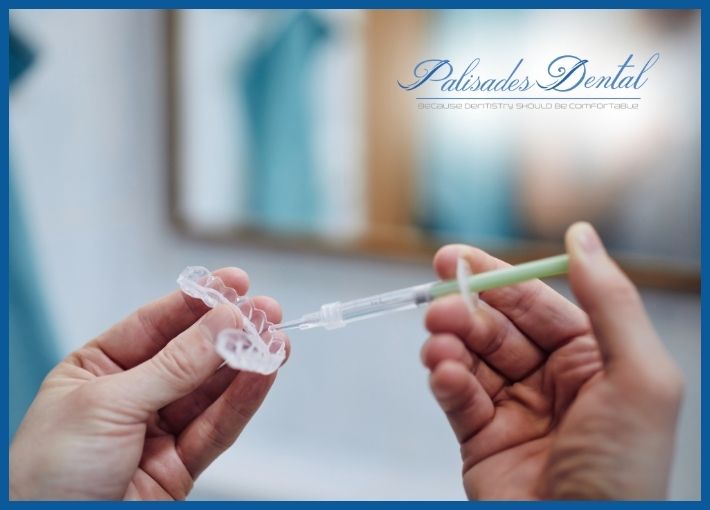
What actually helps: Professional teeth whitening, done with custom-fitted trays and dentist-grade whitening gel, is still far more effective and predictable than store-bought kits. For deeper or more stubborn discoloration, porcelain veneers can cover the surface of individual teeth for a longer-lasting result. Explore our cosmetic dentistry options to see what fits your smile goals. If nighttime grinding is part of the picture, a custom-fitted nightguard from your dentist protects your enamel far better than an over-the-counter version.
4. Reduced tooth pain
It might seem like a win if hot or cold foods bother your teeth less than they used to. That’s caused by dentin, the softer layer beneath your enamel, thickening with age, which shrinks the nerve space inside the tooth and dulls sensation.
The catch: less sensitivity also means fewer early warning signs. A cavity or crack can quietly progress further before you notice anything is wrong. Research on aging teeth backs this up: as dentin builds up and tubules narrow over time, the tooth’s pain response naturally declines, which is part of why sensitivity peaks in early-to-mid adulthood and tends to fade in later decades.
What actually helps: Since pain isn’t a reliable warning system as you get older, routine checkups matter even more. Regular exams and cleanings, ideally twice a year, let your dentist catch cavities, cracks, and wear early, before they turn into bigger (and more expensive) problems.
Getting older doesn’t mean your smile has to suffer. At Palisades Dental, we check for early signs of gum recession, wear, and other age-related changes at every visit, and we build a plan that keeps your teeth and gums healthy for the long run. Schedule your appointment today at 801-756-1009 or email Info@PalisadesDentalUtah.com.
For daily oral health tips and a look inside our American Fork practice, follow us on Instagram @palisadesdental.