

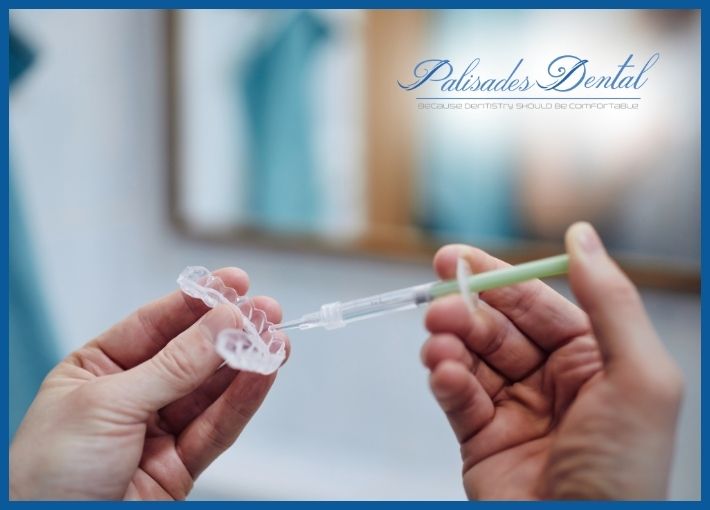
Let’s get something out of the way first: drugstore whitening products are not a scam. Some of them work reasonably well. If you expected a dentist to tell you the strips aisle is all snake oil, this isn’t that article.
But “works reasonably well” and “the best option for your teeth” are different claims, and the gap between a $40 box of strips and professional whitening is bigger than the packaging suggests. As a Utah practice that does a lot of cosmetic dentistry, we’ve seen the full spectrum — patients thrilled with strips, patients burned (literally, in a couple of cases) by aggressive online products, and patients stunned by what supervised whitening accomplished after years of over-the-counter disappointment.
Here’s the honest breakdown, category by category.
The Chemistry Is the Same. The Dose Isn’t.
Nearly every legitimate whitening product — drugstore or professional — relies on the same active ingredients: hydrogen peroxide or carbamide peroxide, which break down stain molecules inside your enamel.
The difference is concentration and control. Over-the-counter strips and pens typically contain low peroxide concentrations because they have to be safe for unsupervised use by anyone who wanders down the aisle. Professional systems use significantly stronger formulas — the kind that are only appropriate when a dentist has examined your teeth first and can protect your gums during treatment.
More peroxide, safely delivered, means deeper stain removal in less time. That single fact explains most of the performance gap.
What the Drugstore Does Well — and Where It Falls Short
Where strips and OTC kits genuinely deliver: mild, recent surface staining on healthy, aligned teeth. If your teeth were reasonably white a year ago and coffee has dimmed them a shade or two, a quality strip product used consistently for a few weeks can noticeably help. The price is friendly and the convenience is unbeatable.
Where they disappoint:
- One-size-fits-nobody fit. Strips are flat; teeth aren’t. They contact the front surfaces unevenly, miss the curves near the gumline, and skip the spaces between crowded or overlapping teeth. The result many people notice: whiter centers, yellow edges.
- Shallow results. Low concentrations mainly address surface stains. Deeper, older discoloration — the kind that builds over decades — often barely budges.
- Sensitivity roulette. Without custom trays, peroxide wanders onto gum tissue. Add overuse (“if two weeks helped, six weeks will help more”) and you get the zingers and irritated gums we hear about constantly.
- No exam first. This is the quiet risk. Whitening over an unseen cavity or exposed root doesn’t just hurt — it delays finding a problem that’s growing. And peroxide won’t lighten crowns or fillings, so DIY whitening can leave old dental work suddenly mismatched in a way nobody warned you about.
What Professional Whitening Actually Gets You
When you whiten with a dentist, you’re not just buying stronger gel. You’re buying the system around it:
An exam before anything touches your teeth.
We confirm your discoloration will actually respond to peroxide, that there’s no decay or gum trouble hiding, and that your existing dental work won’t create a mismatch surprise.
Protection for your gums.
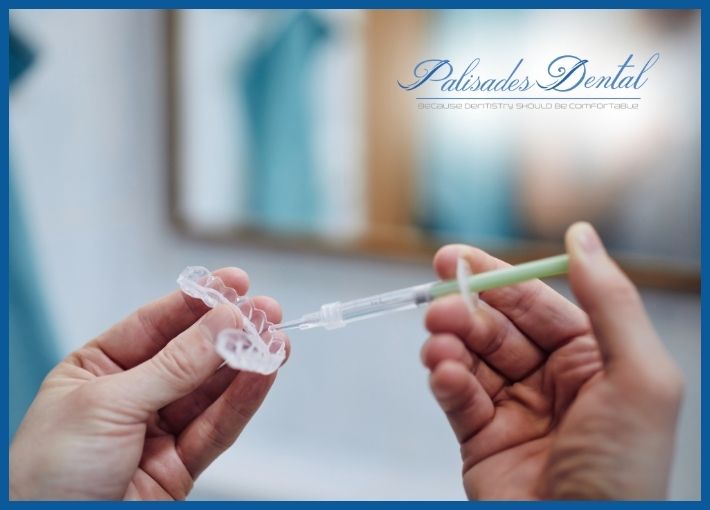
In-office whitening uses barriers to isolate soft tissue; take-home professional kits use custom-fitted trays that hold gel exactly where it belongs and nowhere else.
Real strength, real speed.
In-office treatment can lighten teeth dramatically in a single visit. Professional take-home trays typically show major change within one to two weeks.
Sensitivity management.
If your teeth are prone to zingers, we can adjust concentrations, shorten wear times, and use desensitizing treatments — options a cardboard box can’t offer.
Trays you keep for life.
Once your custom trays are made, future touch-ups just require gel refills. Long-term, that’s a surprisingly economical way to stay bright.
“The question I ask patients isn’t ‘do the strips work?’ — it’s ‘what result are you actually after?’ If you want one or two shades on healthy teeth, the drugstore might get you there. If you want a transformation you’ll see in every photo, that’s what professional whitening was built for.” — Dr. Jeff Youngquist, Palisades Dental
The Honest Scorecard
Cost upfront: Drugstore wins, clearly. Strips cost a fraction of professional treatment.
Cost per shade of improvement: Closer than you’d think. Many patients cycle through several boxes of strips chasing results that one professional treatment would have delivered — and then buy the professional treatment anyway.
Speed: Professional, by a mile. One office visit versus weeks of daily strips.
Evenness of results: Professional. Custom trays and supervised application reach the curves and edges strips miss.
Depth of whitening: Professional. Higher concentrations reach older, deeper discoloration.
Safety and comfort: Professional — not because peroxide is dangerous at drugstore doses, but because supervision, custom fit, and sensitivity management remove the guesswork.
Convenience: Drugstore, if your schedule makes even one appointment hard.
So here’s our genuinely honest bottom line: if your teeth are healthy, your staining is mild, and your expectations are modest, try quality strips — carefully, as directed. If you’ve already tried them and been underwhelmed, if your discoloration is deep or uneven, if you have sensitive teeth, or if there’s a wedding, reunion, or new job headed your way and you want a result you can count on — go professional. That’s not upselling; it’s matching the tool to the job.

Frequently Asked Questions
Do whitening strips actually work?
Yes, modestly — quality strips can lighten mild surface staining by a shade or two over several weeks. They’re less effective on deep or long-standing discoloration, and their flat design often whitens unevenly on curved or crowded teeth.
How much whiter do teeth get with professional whitening?
Results vary by person and starting shade, but professional whitening commonly lightens teeth by several shades — often in a single in-office visit or one to two weeks of custom take-home trays. An exam lets your dentist predict your likely outcome before you spend anything.
Is teeth whitening safe for enamel?
Peroxide whitening, used correctly, does not damage enamel — decades of use support its safety. The real risks are gum irritation and sensitivity from poorly fitting products or overuse, which is exactly what professional supervision and custom trays prevent.
Why won’t my crowns or fillings whiten?
Peroxide only works on natural enamel. Porcelain and composite hold their original shade, so whitening can leave old dental work looking darker than the teeth around it. A dentist can plan around this — one more reason to whiten under supervision if you have visible restorations.
Ready for a Result You Don’t Have to Squint to See?
If you’re done experimenting with the strips aisle, let’s talk about what your smile can actually do.
Explore your options: Cosmetic Dentistry at Palisades Dental Dr. Youngquist and our staff can’t wait to see you. Remember, even if it’s been ages since you have been to the dentist – that’s what we are here for, and we’ve seen it all. Please don’t be hesitant to come and see us – you’ll be so glad that you did.
Call us at 801-756-1009.
Follow Palisades Dental on Instagram @palisadesdental