

A new year is the perfect opportunity to recommit to habits that support your overall health — and your smile is an essential part of that journey. In 2026, building a healthier smile starts with understanding how daily choices, especially nutrition, affect your teeth and gums long before problems appear.
Your mouth, teeth, and gums do far more than help you chew. They’re the first point of contact for everything you eat and drink, playing a critical role in digestion and nutrient absorption. Because of this, the effects of poor nutrition often show up in the mouth before anywhere else in the body — through cavities, weakened enamel, gum inflammation, or sensitivity.
At Palisades Dental, we help patients understand how simple changes can protect their smile for the long term.
The Connection Between Diet and Tooth Decay
What you eat — and how often — directly impacts the health of your teeth. Tooth decay develops when bacteria in the mouth feed on sugars and carbohydrates, producing acids that weaken enamel over time. Several factors influence how quickly this damage occurs, including:
- Whether foods are liquid, solid, sticky, or slow to dissolve
- How frequently sugary or acidic foods and drinks are consumed
- The nutritional makeup of meals and snacks
- The order in which foods are eaten
- Certain medical conditions that may increase cavity risk

Dr. Jeff Youngquist often explains it this way:
“It’s not just about how much sugar you eat — it’s how often your teeth are exposed to it. Frequent snacking or sipping gives bacteria more opportunities to damage enamel.”
Sticky foods and sweetened beverages are especially harmful because they cling to teeth or coat them repeatedly throughout the day, prolonging acid exposure.
Snacking Smarter for a Healthier Smile
Limiting eating and drinking between meals gives your teeth time to recover from acid attacks. While snacking sometimes can’t be avoided, choosing the right foods makes a meaningful difference.
Instead of sweets or chips, tooth-friendly snacks include:
- Cheese and yogurt
- Nuts
- Fresh fruits and vegetables
These options provide essential nutrients while helping neutralize acids and stimulate saliva — your mouth’s natural defense system.
As Dr. Youngquist reminds patients:
“Saliva plays a huge role in protecting teeth. Foods that stimulate saliva help rinse away acids and support enamel repair.”

Building Balanced Meals That Support Oral Health
A balanced diet benefits your entire body — including your smile. Meals built around fruits, vegetables, whole grains, lean proteins, and dairy provide vitamins and minerals essential for strong teeth and healthy gums.
Calcium- and phosphorus-rich foods help rebuild and protect enamel, while fruits and vegetables high in water and fiber help clean teeth naturally. Vitamins like A and C support gum health and healing, reducing the risk of inflammation and infection.
Hydration is just as important. Water is the most tooth-friendly beverage, helping wash away food particles and dilute acids throughout the day.
Foods and Drinks That Can Harm Your Teeth
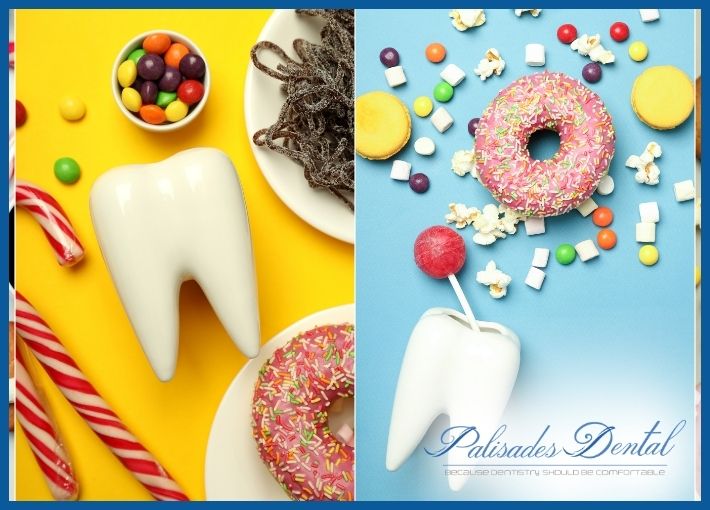
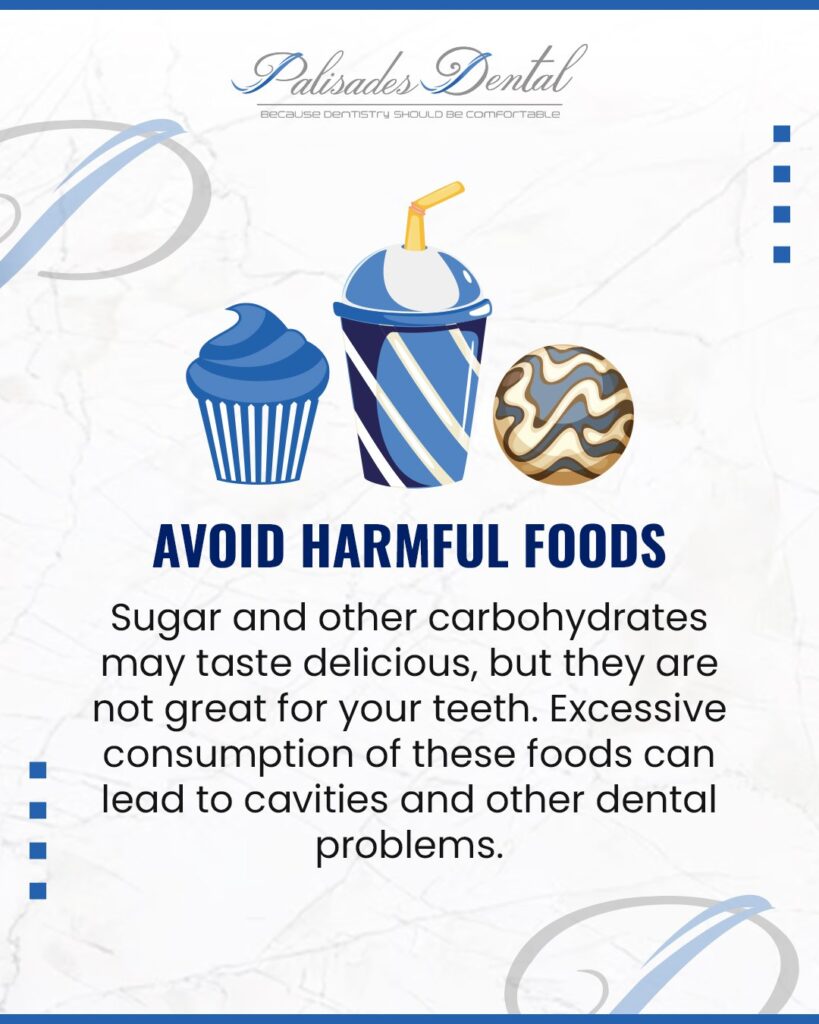
Some foods are particularly damaging to oral health due to how they interact with bacteria in the mouth. Candy — especially hard or sticky varieties — baked goods, chips, and sugary snacks provide fuel for acid-producing bacteria while offering little nutritional benefit.
Sweetened beverages such as soda, juice, flavored coffee, and sweet tea are among the biggest contributors to tooth decay. Sipping them throughout the day creates a constant acidic environment that weakens enamel over time.
Even nutritious foods like citrus fruits, tomatoes, and dried fruits can harm enamel when eaten alone or frequently due to their acidity or stickiness. Enjoying them as part of a meal helps reduce their impact.
Sugar Awareness Makes a Big Difference
Added sugars hide in many everyday foods and drinks. Reducing sugar intake lowers cavity risk by limiting the fuel bacteria need to produce damaging acids. Reading ingredient labels and being mindful of foods with multiple sugar sources helps protect your teeth year-round.
Sugar substitutes, while sweet-tasting, don’t promote acid production in the mouth the way sugar does, making them a safer option when used in moderation.
Preventive Care Brings It All Together
Healthy eating habits are most effective when paired with regular professional dental care. Routine cleanings and exams allow your dental team to identify early signs of decay, enamel wear, or gum disease — often before symptoms appear.
You can learn more about how we support preventive and general dentistry at
https://palisadesdentalutah.com/
Dr. Youngquist emphasizes:
“When patients combine smart nutrition with consistent dental visits, they dramatically reduce their risk of cavities and long-term dental problems.”
Start 2026 With a Healthier Smile
This year is the perfect time to invest in habits that protect your smile for life. Come in and meet with Dr. Youngquist and his caring team. By brushing twice daily, limiting between-meal snacking, reducing added sugars, choosing nutrient-rich foods, and staying hydrated, you set your teeth up for long-term success.
📞 Call 801-756-1009 today to schedule your appointment with Palisades Dental and take a proactive step toward a healthier, more confident smile in 2026.
For more dental tips, reminders, and updates from our team, follow us on Instagram:
👉 https://www.instagram.com/palisadesdental/
Your smile deserves expert care — and we’re proud to be your partner in oral health all year long.